Yard Drainage & French Drain Installation
in Houston & Clear Lake
If your yard holds water for days after a storm, you're not imagining it — and it's not a problem that fixes itself. Houston Gate LLC designs and installs yard drainage systems across Clear Lake and greater Houston: French drains, catch basins, channel drains, and grading that move water away from your house and give you your yard back. One crew, a written itemized estimate before we dig, and a yard put back together when we leave. Call (832) 807-0523 for a free on-site estimate.
Home Depot Pro Referral Contractor · Angi Best Service 2019–2024 · Multiple-Time Yard of the Month Winner — Residential & Commercial
Why Houston Yards Flood
Houston gets roughly 50 inches of rain a year, much of it in downpours that drop several inches in an afternoon. Our lots are flat, so water has nowhere to run. And the soil underneath most Bay Area homes is gumbo clay — dense, heavy clay that absorbs water slowly and holds it like a bowl. Rain lands, the clay seals up, and the water just sits: in the side yard, along the fence line, against the slab.
Standing water is more than an annoyance. Puddles against the foundation keep the soil at your slab saturated, which is hard on foundations over time. Soggy turf dies off and turns to mud. Beds wash out, mulch floats away, and mosquitoes breed in water that never drains. The fix isn't a bag of topsoil or a shallow ditch — it's a system that collects the water and carries it somewhere it can legally and safely go.
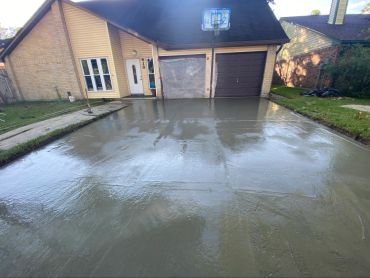
Signs Your Yard Needs Drainage
• Water stands in the yard 24–48 hours or more after rain stops
• The side yard between houses stays muddy long after the rest dries
• Water pools against the foundation, patio, or driveway
• Mulch and soil wash out of beds during heavy rain
• Grass dies in the same low spots every year, no matter what you plant
• Downspouts dump roof water right at the base of the house
• Your back fence line or gate area is a permanent swamp
If two or three of those sound familiar, the yard doesn't have a grass problem — it has a water problem. Drainage comes first; everything else you plant or build on top of a wet lot is money at risk.
What Is a French Drain?
A French drain is a gravel-filled trench with a perforated pipe at the bottom, set on a slope. Water in the surrounding soil seeps into the gravel and pipe instead of sitting on the surface, and the pipe carries it downhill to a discharge point — a street-side swale, a drainage easement, or another approved spot away from the house. Done right, it's invisible when we're finished: the trench is backfilled, and the sod or beds go back over the top. It works quietly for decades with no moving parts and nothing to maintain under normal conditions.
The difference between a French drain that works for 20 years and one that clogs in three is the installation: correct depth in clay, a real slope on the pipe (water only moves downhill), fabric that keeps clay silt out of the gravel, and a discharge point that actually drains. That's the part we don't shortcut.
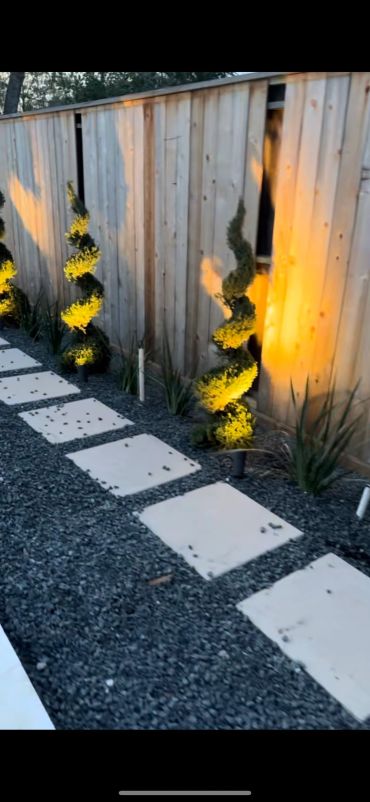
How We Install It: Our Process
1. We walk the lot with you. Mike personally walks every project before we start. We look at where the water collects, where it comes from (roof runoff, neighbor runoff, a low lot), and where it can go. In flat Houston lots, finding a discharge point with enough fall is the whole ballgame — we solve that first, on paper, before any digging.
2. You get a written, itemized estimate before we dig. No vague allowances, no surprise add-ons. The estimate spells out the drain runs, materials, and restoration, with full terms — the same straightforward pricing we use on every job.
3. We install the system. Trench dug to depth, pipe set on slope, gravel and fabric placed, basins and tie-ins connected. Most residential systems go in within 1–2 days.
4. We put your yard back. This is where a design-to-installation crew beats a drain-only outfit: the same people who dug the trench restore the sod, re-edge the beds, and replace the mulch. You don't get left with a dirt scar and a list of other contractors to call.
5. We walk it with you when it's done. You see exactly what went in the ground and where the water now goes.
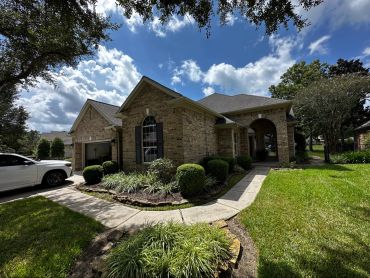
Drainage Systems We Install
French drains. The workhorse for soggy yards and wet side lots. Perforated pipe in a gravel trench intercepts groundwater and surface water and carries it to a discharge point.
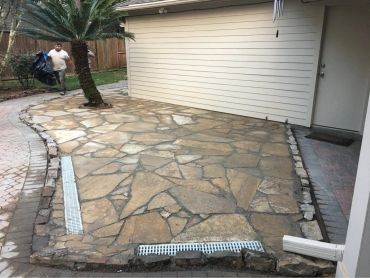
Catch basins. Grated basins set at low points — a patio corner, the bottom of a driveway slope, the spot where the whole yard drains to — connected to solid pipe that moves collected water out fast. Often paired with a French drain: the basin grabs surface water, the French drain handles the saturated soil.
Channel drains. Long, narrow grated drains that cut across driveways, patios, and pool decks to stop water before it reaches the garage or the house. The right answer when water sheets across concrete toward your door.
Downspout tie-ins. Your roof sheds thousands of gallons in a big storm, and standard downspouts dump it right at the foundation. We bury solid pipe from the downspouts and carry that water to the discharge point instead.
Regrading and swales. Sometimes the pipe isn't the problem — the grade is. We regrade low areas and cut shallow swales that steer surface water around the house and toward drainage, often combined with a drain system for lots that need both.
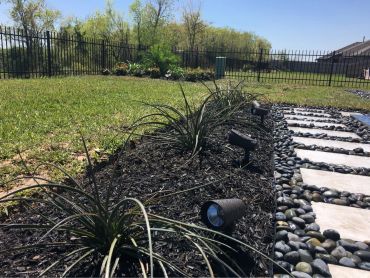
Dry creek beds. Our favorite solution where it fits: a stone-lined channel that works like a swale but looks like a landscape feature. Dry most of the year, it carries storm water through the yard during downpours, controls erosion, and reads as a deliberate part of the design — river rock, boulders, and plantings along the banks. For homeowners who need serious water movement but don't want their yard to look like a drainage project, a dry creek bed is the one option that makes the yard look better while it fixes the problem. It's drainage you can show off.
What Does Yard Drainage Cost in Houston?
Most residential drainage work we install falls into two bands: a simple drain line runs $800–$1,500, and a full yard drainage system runs $2,000–$5,000 or more, depending on length, depth, and how many basins and tie-ins the yard needs. Every yard moves water differently, so any honest price starts with walking the lot — how much drain run you need, how deep we have to go in clay, and where the water can discharge all move the number. Your written estimate is itemized before work starts, and the price on it is the price you pay.
Frequently Asked Questions
Get a free on-site drainage estimate — call (832) 807-0523 or email info@houstongate.net.
A standard residential French drain on your own lot generally does not require a City of Houston permit. What you can't do is discharge onto a neighbor's property or tie into the city storm sewer without approval — part of our walk-through is identifying a legal discharge point on or from your lot, so the system is compliant from day one.
In Houston gumbo clay, we typically set pipe 12–24 inches deep — deep enough to get below the saturated surface layer and intercept the water moving through the clay, with enough slope to keep it flowing. Shallow trenches are the most common reason DIY and cut-rate drains fail here: in clay, the water table after a storm sits high, and a 6-inch trench never reaches it.
Most residential systems take 1–2 days, weather permitting. Larger lots with multiple runs, basins, and regrading can take longer — you'll get the timeline in writing with your estimate.
A properly installed system — right depth, right slope, fabric keeping clay silt out of the gravel — should last 20–30 years or more. There's nothing mechanical to wear out. The systems that fail early almost always trace back to shallow depth, no slope, or no fabric.
There's digging involved — there's no honest way around that. The difference is what happens after: because we're a full landscaping crew, we restore the sod and beds over the trench as part of the same job. Within a few weeks of growth, most homeowners can't point to where the drain runs.
Yes, and it usually should be. Drainage and grading come first in the right order of a yard project — before patios, planting, and sod — so the finished work isn't undermined by the first big storm. If you're planning a larger landscape project, we'll sequence the drainage into it.
Areas We Serve
Houston Gate LLC is based near Space Center Blvd in Houston (77059) and installs drainage systems across the Bay Area and greater Houston: Clear Lake, League City, Webster, Friendswood, Seabrook, Kemah, Nassau Bay, El Lago, Taylor Lake Village, Dickinson, Pasadena, and Pearland — plus Sugar Land, Katy, and Missouri City for the right project. Don't see your neighborhood? Call — we travel for the right project.
Get a Free Drainage Estimate
Walk your yard with us and get a written, itemized estimate — free, no pressure. Call or text Mike Jandali at (832) 807-0523, or email info@houstongate.net. Serving Clear Lake and the Houston Bay Area, Monday through Saturday.
© 2026 Houston Gate LLC. All rights reserved.
Houston Gate LLC · Space Center Blvd, Houston, TX 77059 · (832) 807-0523 · info@houstongate.net · Instagram: @houstongatellc